RECENT SEARCHES
Recently Viewed
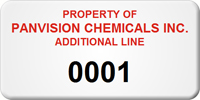
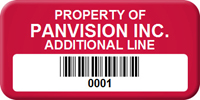
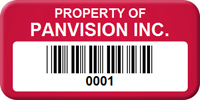
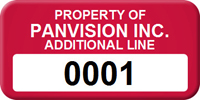
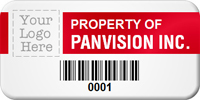

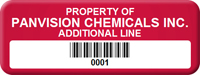
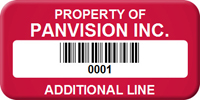


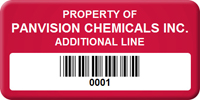
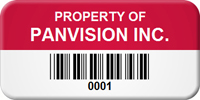
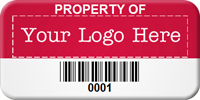
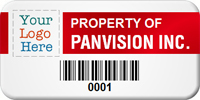


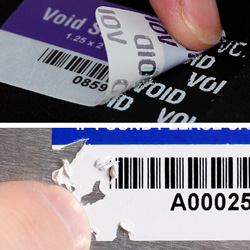
Tamper-evident labels are specialized security labels designed to show visible evidence of removal or tampering. Once applied, a tamper-evident label cannot be removed cleanly. It either leaves a VOID message on the surface, destroys itself into fragments, or both. Tamper-evident labels protect IT equipment, electronics, medical devices, pharmaceutical packaging, cash and evidence bags, and any high-value asset where unauthorized access or relabeling is a concern. Browse our tamper-evident labels to compare formats.
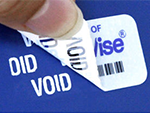
Tamper-evident labels use specialized adhesives and face materials that bond permanently to the surface. When someone tries to remove the label, the material either leaves a visible VOID pattern, self-destructs into pieces, or transfers ink to the surface below. This makes any tampering attempt immediately visible, providing clear evidence that a product or asset has been opened, moved, or relabeled without authorization. The mechanism is built into the layers: the adhesive is stronger than the face stock, so the label fails before the bond does.
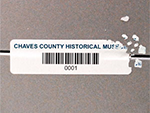
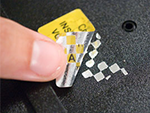
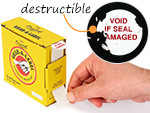
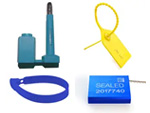
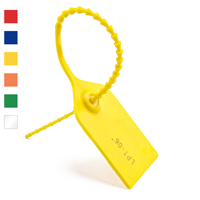
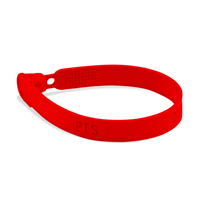
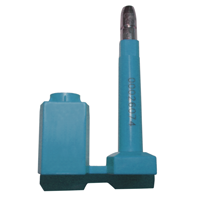
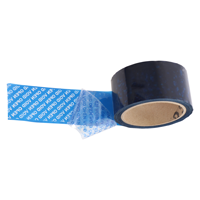
Tamper-evident products fall into four main groups. Destructible vinyl labels shred into fragments when removal is attempted. VOID labels leave a repeating VOID pattern on the surface when peeled. Checkerboard security labels split into a two-tone pattern on removal. Physical security seals, including pull-tight seals, barcoded truck seals, and high security bolt seals, lock through hasps and container doors and must be cut off to open. For sealing cartons, we recommend tamper evident tape that reveals a hidden message when lifted.
Tamper-evident labels reveal that tampering happened; tamper-resistant packaging makes tampering physically difficult. A tamper-evident label does not stop anyone from opening a product. Instead, it records the attempt with a VOID imprint, a shredded label, or a broken seal that cannot be reversed or reapplied. Tamper-resistant designs like locked enclosures, sealed caps, and induction seals add a physical barrier to entry. FDA packaging rules are built on the tamper-evident approach because visible proof of interference lets consumers reject compromised products at the shelf. For most asset and packaging security programs, we recommend tamper-evident labels because they are inexpensive, fast to apply, and produce clear evidence.
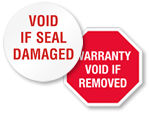
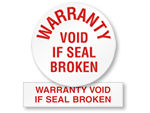
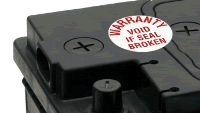
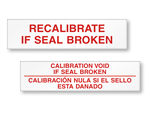
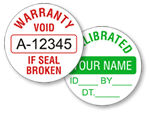
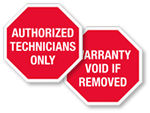
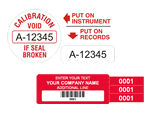
The most common uses for tamper evident labels are sealing pharmaceutical and food packaging, securing IT assets and electronics against unauthorized opening, enforcing warranties, protecting calibration settings, and sealing cash bags, evidence bags, cartons, and shipping containers. For warranty enforcement, we recommend warranty void labels placed over enclosure screws or seams. For instruments and gauges, use calibration void labels applied across access panels and adjustment points. For cartons and totes, apply tamper evident tape across every opening seam.
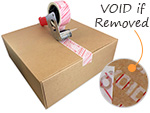
Use tamper evident tape to seal a carton and tamper evident labels to secure a specific item, seam, or access point. Tape runs the full length of a box seam and reveals a hidden message such as OPENED or VOID when lifted, which is ideal for shipments passing through multiple hands. Labels are targeted: a small VOID or destructible label over a screw, battery door, meter cover, or lid seal marks one exact entry point and carries a serial number tying that unit to your records. Many operations use both, taping the outer carton and sealing the product inside. For cartons and pallets, see our tamper evident tape. For items, see our custom tamper evident labels.
Holographic security seals combine an optical layer with a tamper-evident adhesive, defeating two different attacks at once. The holographic film carries rainbow effects, 2D and 3D patterns, micro text, and custom logos that ordinary printing and copying cannot reproduce because a hologram cannot be recreated by scanning or photographing it. Behind that film is a VOID release layer, so lifting the seal destroys the optical effect and prints the VOID pattern onto the surface underneath. This makes a holographic seal both an authentication device, proving the item is genuine, and a tamper-evident device, proving it has not been opened. For product authentication and brand protection, we recommend holographic and metalized foil formats, optionally paired with serial numbers or QR codes for unit-level verification.
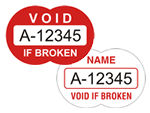
Choose a tamper-evident label by answering three questions: what surface it goes on, what evidence you need, and whether each unit must be uniquely identified. On smooth plastic, metal, and glass, most formats bond well. On textured, powder-coated, or low-energy plastic surfaces, choose a conformable material and clean the surface with alcohol first. For evidence, pick a VOID label when you want the item marked but intact, a destructible label when the label must never be transferable to another unit, and a physical seal when a door or container must be closed rather than a surface marked. For unique identification, add sequential numbering or a barcode so each label ties to one record. For high-value goods facing counterfeiting, add a holographic layer. Request samples and test on your actual surface before committing to a run.
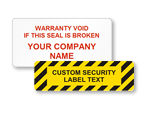
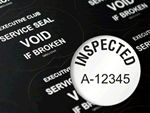
Tamper evident labels protect brands by making counterfeiting, refilling, unauthorized repair, and warranty fraud visible at a glance. A custom tamper evident label printed with your logo, brand colors, and sequential serial numbers is difficult to duplicate and impossible to move from a genuine product to a fake one because removal destroys the label. On electronics, place a destructible or VOID label across an enclosure seam or over a case screw so any attempt to open the housing is recorded. This is how manufacturers enforce warranty terms and identify units opened outside an authorized service channel. Adding barcodes or QR codes lets you verify each unit against your records. For returns fraud and gray-market resale, we recommend sequentially numbered security labels so every unit traces to its original sale.
Pharmaceutical and food packaging use tamper-evident seals at every point a container can be opened, and the label is one layer in a system that also includes shrink bands, induction seals, and blister backing. The label layer typically carries a VOID or destructible seal across the closure or carton flap, so a lifted lid or opened box shows permanent evidence before the product reaches a consumer. Print the seal with an identifying characteristic, such as your logo, brand name, or a registered design, since FDA rules require the tamper-evident feature to be distinctive enough that it cannot be replaced with a generic substitute after tampering. For pharmaceutical work we recommend destructible or VOID formats with lot and serial numbering, which supports both the tamper-evident requirement and downstream traceability.
Tamper-evident packaging is legally required for most over-the-counter drug products sold at retail, under FDA regulation 21 CFR 211.132, which calls for one or more indicators or barriers to entry that provide visible evidence of tampering and exempts dermatological, dentifrice, insulin, and lozenge products. The rule also requires the feature to be distinctive by design, using an identifying characteristic such as a pattern, name, trademark, or logo, so it cannot be replicated with stock materials. A companion rule, 21 CFR 700.25, applies the same approach to cosmetic liquid oral hygiene products and vaginal products. Tampering with a consumer product is itself a federal crime under the Federal Anti-Tampering Act. Tamper-evident labels and seals fill the indicator role these packaging rules describe.
The key standards for anti-tamper labels and seals are ISO 21976:2018 for medicinal product packaging and ISO 17712 for cargo security seals. ISO 21976, which builds on the European standard EN 16679, specifies how tamper verification features are applied to and checked on pharmaceutical packaging, and it supports the tamper-protection requirement of the EU Falsified Medicines Directive. ISO 17712 classifies mechanical seals for shipping containers by strength and tamper resistance, and cross-border shipments under the C-TPAT program require ISO 17712 “H” rated high security seals. In the United States, FDA rules 21 CFR 211.132 and 21 CFR 700.25 set the packaging requirements for OTC drugs and covered cosmetics. For container shipping, we recommend our C-TPAT compliant high security bolt seals.
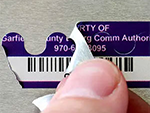
Tamper-evident labels are made from destructible vinyl, polyester, and metalized or holographic foil, each engineered to respond differently to removal attempts. Destructible vinyl tears apart on removal, making clean peeling impossible. Polyester VOID labels leave a VOID imprint on the surface. Metalized and holographic foils add an optical security layer that resists copying. Match the material to the environment and the threat. Polyester and foil handle heat, moisture, and cleaning better than vinyl, which matters on equipment that gets washed down or lives outdoors. Our custom tamper-evident labels are available in multiple materials to match your security level, surface type, and environment.
Adhesive residue from a tamper-evident label comes off with isopropyl alcohol or a citrus-based adhesive remover, a plastic scraper, and a clean cloth; soak the residue first, then lift it gently so you do not scratch the surface. The VOID imprint left by a void label is a printed security feature rather than simple glue, so expect several passes of solvent to clear it. That difficulty is intentional. Tamper-evident labels are designed so removal is slow, obvious, and never clean, which is exactly what makes them effective. If you need a label that comes off cleanly from reusable equipment, we recommend our removable asset labels instead. Call 1-888-343-3729, Monday through Friday, 8:00am to 7:00pm EST, or email customerservice@smartsign.com for help matching a label to your surface.
We specialize in tamper-evident labels. These labels show visible, permanent evidence that a product or asset has been opened, moved, or relabeled, making them the standard for pharmaceutical, food and beverage, electronics, software, and cosmetics packaging. Our range covers every way a label can reveal interference: VOID labels that print a message onto the surface, destructible labels that shred on contact, checkerboard labels that split into a two-tone pattern, holographic seals that cannot be copied, and physical security seals that must be cut to open.
Call our sales team at (800) 952-1457 and get your quote in minutes!
Mon - Fri 8:00am to 7:00pm EST